Friday, May 14, 2010

5 Reasons Why Type One Diabetes is on the Rise


A 2009 study in The Lancet found that new cases of type 1 diabetes in kids could double in the next 10 years. Possible reasons for this dramatic rise include:


  1. Too big too fast. The “accelerator hypothesis” theorizes that children who are bigger and grow more quickly are more likely to develop type 1 diabetes.
  2. Too little sun. The “sunshine hypothesis” comes from data showing that countries situated closer to the equator have lower rates of type 1 diabetes.
  3. Too clean. The “hygiene hypothesis” is the notion that cleanliness — lack of exposure to certain germs and parasites — may increase susceptibility to diseases like diabetes.
  4. Too much cow’s milk. The “cow’s milk hypothesis” states that exposing babies to infant formula containing cow’s milk in the first six months of life damages their immune systems, and can trigger autoimmune diseases such as type 1 diabetes.
  5. Too much pollution. The “POP hypothesis” alleges that being exposed to pollutants increases diabetes risk.

Sources:

U.S. News & World Report April 27, 2010

Important Notice: Information provided is for general background purposes and is not intended as a substitute for medical diagnosis or treatment by a trained professional. You should always consult your community pharmacist or physician about any health care questions you may have, especially before trying a new medication, diet, fitness program, or approach to health care issues.

Thursday, May 6, 2010

More TV for Toddlers Means School Trouble Later

Toddlers who watch too much have measurably lower scores in math later in life and get bullied more often than other children. They also weighed more by the time they were 10 and consumed more snacks and soft drinks.

Children who spend all their time watching TV may lose valuable chances to learn social skills.

Reuters reports:

“The researchers started with more than 2,000 children taking part in a larger study ... Every additional weekly hour of television at 29 months corresponded to a 7 percent drop in classroom attention and a 6 percent drop in math skills [by the age of 10] ...”


Sources:

Wednesday, May 5, 2010

The Best Exercises For Your Facial Muscles To Stay Looking Young


Your facial muscles need exercise just as much as the rest of your body. And facial exercises work just like regular muscle exercises.

Intent.com suggests the following to keep your face looking young:

“1. Raise your eyebrows as high as you can and hold them for five seconds.

2. Open your mouth as wide as possible and stick your tongue out as far as you can and hold for a few seconds.

3. Using your three center fingers, press down on your cheeks and smile as hard as you can to raise your cheek muscles against your fingers.

4. Move your nose as much as you can from side to side.

5. Lift your eyebrows as high as you can, open your eyes as wide as possible and frown at the same time.

6. Pucker your lips out as far as possible into the shape of an "O." Then change your expression into a wide smile. Repeat several times.

7. Sit in a comfortable chair and look up at the ceiling. Pucker your lips and stick your tongue out as far as possible to exercise your neck muscles.”


Sources:
Intent April 27, 2010
http://blogs.mercola.com/sites/vitalvotes/archive/2010/05/04/the-best-exercises-for-your-facial-muscles-to-stay-looking-young.aspx

Monday, May 3, 2010

May is National Correct Posture Month - check out these 'good posture' exercises!

With May being National Correct Posture Month, it seems only right to think about ways to improve the posture.

Here’s what Dr Greg Thielman, Assistant Professor of Physical Therapy at the University of Philadelphia, suggests in the way of tips and exercises

Evaluate your workstation: A workstation is anywhere that an individual spends a notable amount of time daily and for many of us, our primary workstation is standing or sitting at a desk. “If you’re sitting, don’t drop a ton of money on an ergonomic chair. Instead, position the chair to provide lumbar, shoulder, and if needed, head support.”

Perform daily exercises: Dr. Thielman recommends regularly exercising the large muscles on the front and back of the thigh, the abdominal muscles, and performing three exercises daily:

  1. Pelvic Tilt: “While sitting, push your pelvis back into the chair, hold it for three seconds and then relax. This tightens and strengthens your abdominal muscles,” explains Dr. Thielman.
  2. Chin Tucks: “Also while sitting, put your pointer finger on your chin and push straight back. Be sure your head isn’t tilted up or down and this exercise will realign your spine and combat forward head position.”
  3. Lean Back: “Lastly, most of what we perform at our workstations forces us anterior, so we’re constantly bending forward. To straighten the spine, stand-up, put your hands on your lower back, and lean back. This exercise combats the effects of being in a forward position.”

Invest in supportive shoes: Stiletto heels may look good, but Dr. Thielman warns they don’t do women any favors in the posture department. “There is no such thing as a good high heel shoe.” Shoes that cover the top of the foot are ideal. “Each brand fits differently, but the key is to find one that works for you and that gives the much-needed overall support.”'

***Come into the pharmacy and ask our knowledgeable staff about the shoe support items we offer.***

-----------

Source:

http://blisstree.com/feel/straighten-up-for-national-posture-month/

Important Notice: Information provided is for general background purposes and is not intended as a substitute for medical diagnosis or treatment by a trained professional. You should always consult your community pharmacist or physician about any health care questions you may have, especially before trying a new medication, diet, fitness program, or approach to health care issues.


Saturday, May 1, 2010

How many times do you hit the snooze button in the morning? Here are 5 tips for becoming an early riser.

If you’d like to become an early riser, there are some things you should know before you run off to set your alarm clock.

Here are five tips:

Choose to get up before you go to sleep

You’re not very good at making decisions when you’ve just woken up. This is not the time to be making decisions about whether or not you should stay in bed! If you want to be a consistently early riser, try making your decision to rise at a specific time before you go to sleep the night before.

Have a plan for your extra time

Let’s say you’ve actually made it out of bed 2 hours before you normally would. If you don’t have something planned to do with your extra time, you risk falling for the temptation of a “morning nap” that wipes out all the work you put into getting up.

Make rising early a social activity

Wouldn’t it be great to join an early breakfast club, running group, or play chess in the park at 5 AM?

Don’t use an alarm that makes you angry

If we’re all wired differently, why do we all insist on torturing ourselves with the same sort of alarm each morning? Experiment a bit and see what works best for you. Light, sound, smells, temperature, or even some contraption that dumps water on you might be more pleasant than your old alarm clock.

Get your blood flowing right after waking

It doesn’t take much to get your blood flowing and chase the sleep from your head. Just pick something you don’t mind doing and go through the motions until your heart rate is up. Jumping rope, push-ups, crunches, or a few minutes of yoga are typically enough to do the trick.

------
Sources:
Lifehack March 22, 2010

Important Notice: Information provided is for general background purposes and is not intended as a substitute for medical diagnosis or treatment by a trained professional. You should always consult your community pharmacist or physician about any health care questions you may have, especially before trying a new medication, diet, fitness program, or approach to health care issues.

Thursday, April 29, 2010

6 Effective Ways To De-Junk Your Life

1. Be honest

You don't need lies in your life, and being honest only gets easier with practice.

2. Make a list of just 7 things that are irreplaceable

Once you know what's important to you, you’ll probably get rid of some things that aren't.

3. Make a list of just 5 people who matter the most to you

Once again, keeping in touch with the people who really mean something to you will help you realize your true priorities.

4. Move into a smaller living space

You'll throw out some stuff during the moving process, and a small home means you'll be faced with clutter on a daily basis until you get rid of more.

5. Quit your job

Or just pretend and make some plans. You might be surprised by what you come up with.

6. Train for an endurance race

This can provide an amazing amount of stress relief as well.

-------
Sources:
Lifehack March 30, 2010


Important Notice: Information provided is for general background purposes and is not intended as a substitute for medical diagnosis or treatment by a trained professional. You should always consult your community pharmacist or physician about any health care questions you may have, especially before trying a new medication, diet, fitness program, or approach to health care issues.

Tuesday, April 27, 2010

Health Benefits of Honey - how do you like to use honey?

Honey-as-Antioxidant

Honey, a most easily digestible carbohydrate compound, has been used by the mankind over 2500 years and has been known worldwide for its numerous health benefits. It is no wonder that the traditional medicines such has Ayurveda have realized the medicinal values of honey and has made it an essential ingredient in all the medicines. Even in modern medicine, research is going on in analyzing the benefits of honey especially its benefits in healing cuts and wounds.

The fact that it can be consumed very easily makes it so popular. It can be taken directly as raw honey, mixed with juices and beverages instead of sugar, mixed with hot water and can also be consumed as a sweetener with bread or bun. There are number of health benefits of honey and here is a quick brief of the most important health benefits.

Honey-Bread

Honey is a natural energy booster

Research has proved that a single tablespoon of honey can provide 64 calories in comparison with natural sugar that produces only 50 calories. Unlike natural sugar which needs to undergo an inversion process during digestion, honey has already accomplished this process and hence it more easily digestible than sugar and thus produces more energy in a shorter time. It is because of this special benefit it is consumed by athletes as it helps them maintaining blood sugar levels and muscle recuperation after a hard work out. It contains natural fruit sugars that help in preventing fatigue during exercise. Honey has two varieties of sugar, glucose and fructose. Glucose is more readily assimilated by the body and hence provides instant energy while fructose is assimilated more slowly providing sustainable energy.

Benefits-of-Honey

Honey and weight loss

Though honey has the capability to provide more calories than sugar, when consumed with hot water, it proves as a good weight loss agent by burning the fat stored in our body. Similarly honey can also be used with lemon juice and cinnamon that will help in reducing weight.

Honey-Weight-loss

Honey as antioxidant

Honey contains an effective antioxidant named as nutraceuticals. Antioxidants are essential elements that are required to fight the harmful free radicals that cause aging and other health hazards.Thus honey help in removing these free radicals and builds the immunity of our body.

Honey-as-Antioxidant1

Honey and remedy for ailments

No one can deny the fact that honey has been used as natural medicine to heal cuts and wounds. Right from the early past, people have been using honey to heal wide range of ailments such as yeast infection, athlete foot and arthritis pain. Honey has antiseptic and antimicrobial properties that curbs the growth of certain harmful bacteria and helps to keep external wounds clean and free form any infection. It is also an essential requirement in every first aid kit as it has properties to instantly cure wounds.

Honey-2

Honey for curing sore throats

One of the most important and most popular health benefits of honey is its ability to treat sore throats. It is due to its anti-microbial properties it tends to soothe the throat and also helps in destroying the bacteria that causes the infection.

History-of-Honey

Honey as a source of vitamins and minerals

Honey undoubtedly is a rich source of vitamins and minerals. The type of mineral and vitamin present in honey depends on the type of flower used for beekeeping.

Honey-Bee

Thus depending on that it contains rich mineral and vitamins that give honey all its medicinal properties and anti-bacterial properties.Honey is also used in conjunction with milk to keep your skin smooth and young.

Milk-and-Honey

Hence consuming milk and honey daily is a common practice followed in many countries for getting a smooth skin.

---

Source: http://www.justhealthtips.com/health-benefits-of-honey.html

Important Notice: Information provided is for general background purposes and is not intended as a substitute for medical diagnosis or treatment by a trained professional. You should always consult your community pharmacist or physician about any health care questions you may have, especially before trying a new medication, diet, fitness program, or approach to health care issues.

Sunday, April 25, 2010

Pregnancy Workouts for Every Stage

If you're pregnant and not sure what kind of workout you should be doing, celebrity fitness trainer Tracy Anderson, creator of the Tracy Anderson Perfect Design Series, is here to guide us through some exercises that are right for each stage of your pregnancy.

Anderson says when you're pregnant, the most important thing to remember is to listen to your body because everyone is different.

"Some people can work out through their entire pregnancy, but others like me, felt like everything hurt, so listen to what your body is telling you," she said. "Most importantly, there are different kinds of exercises that are safe during the different stages of your pregnancy."

EXERCISES FOR VARIOUS PREGNANCY STAGES:

First trimester -- During your first trimester, Anderson says there are a lot of exercises that you can do at this stage.

"You can really still do ab exercises so you should concentrate on that area while you still can do these exercises," she said.

Ab exercises:
Attitude Ab Lift:

Lean back on elbows. Legs start straight out in front of you. Lift one leg to 90 degrees in an attitude position. Slightly bent and turned out. Then return to the ground. Do 10 on the right then 10 on the left.

Frog pull alternating passé ab lift:
Lean back on elbows legs straight out in front of you pull them into your chest knees open feet stay together. Return for a beat then lift one leg straight and the other to a passé. Legs out and switch.

Second trimester -- Anderson says you should do exercises that target your butt and thighs. She added, "I also try to do a lot of exercises on all fours as that helps to ease some of the pressure on your back."

Leg and butt exercises:
Diagonal cross lift:

Kneel on all fours start with one leg straight out to the side knee forward lift across back with a slight bend. At the end of the movement stretch the leg straight across at an upward diagonal.

Inverted butt lift with outer thigh raise:
Kneel of all fours begin with right leg bent and knee facing inward with foot out to the side. Keeping the inverted position raise the foot to the ceiling. When you bring the foot down add an outer thigh lift keeping the knee bent raise knee to the side.

Third trimester -- At this point, Anderson says, most women don't want to show off anything except their arms, so I have my clients do exercises that target their arms.

Arm exercises:
Twisting bicep press:
Using three-pound weights, raise right arm slightly bent from hip to above head as you lean into the left hip. When you bring it back down rotate to palm facing ceiling. Keeping this rotation press arm to the ceiling.

"T" arm pull back: Using three-pound weights, hold arms out to the side in a "T" position palms face back, pull elbow back. If you're pregnant and not sure what kind of workout you should be doing, celebrity fitness trainer Tracy Anderson, creator of the Tracy Anderson Perfect Design Series, is here to guide us through some exercises that are right for each stage of your pregnancy.

Anderson says when you're pregnant, the most important thing to remember is to listen to your body because everyone is different.

"Some people can work out through their entire pregnancy, but others like me, felt like everything hurt, so listen to what your body is telling you," she said. "Most importantly, there are different kinds of exercises that are safe during the different stages of your pregnancy."

EXERCISES FOR VARIOUS PREGNANCY STAGES:

First trimester -- During your first trimester, Anderson says there are a lot of exercises that you can do at this stage.

"You can really still do ab exercises so you should concentrate on that area while you still can do these exercises," she said.

Ab exercises:
Attitude Ab Lift:

Lean back on elbows. Legs start straight out in front of you. Lift one leg to 90 degrees in an attitude position. Slightly bent and turned out. Then return to the ground. Do 10 on the right then 10 on the left.

Frog pull alternating passé ab lift:
Lean back on elbows legs straight out in front of you pull them into your chest knees open feet stay together. Return for a beat then lift one leg straight and the other to a passé. Legs out and switch.

Second trimester -- Anderson says you should do exercises that target your butt and thighs. She added, "I also try to do a lot of exercises on all fours as that helps to ease some of the pressure on your back."

Leg and butt exercises:
Diagonal cross lift:

Kneel on all fours start with one leg straight out to the side knee forward lift across back with a slight bend. At the end of the movement stretch the leg straight across at an upward diagonal.

Inverted butt lift with outer thigh raise:
Kneel of all fours begin with right leg bent and knee facing inward with foot out to the side. Keeping the inverted position raise the foot to the ceiling. When you bring the foot down add an outer thigh lift keeping the knee bent raise knee to the side.

Third trimester -- At this point, Anderson says, most women don't want to show off anything except their arms, so I have my clients do exercises that target their arms.

Arm exercises:
Twisting bicep press:
Using three-pound weights, raise right arm slightly bent from hip to above head as you lean into the left hip. When you bring it back down rotate to palm facing ceiling. Keeping this rotation press arm to the ceiling.

"T" arm pull back: Using three-pound weights, hold arms out to the side in a "T" position palms face back, pull elbow back.

Click here to see a pregnancy workout video.

----
Source:
http://www.cbsnews.com/stories/2010/02/26/earlyshow/health/main6245916.shtml

Important Notice: Information provided is for general background purposes and is not intended as a substitute for medical diagnosis or treatment by a trained professional. You should always consult your community pharmacist or physician about any health care questions you may have, especially before trying a new medication, diet, fitness program, or approach to health care issues.

Wednesday, April 21, 2010

11 Simple Ways to Avoid Burnout

1. Schedule regular social activities

Remember when you used to spend time with people you were neither working with nor sleeping with? You watched movies, ate meals, played games, and went on trips. You were active and you had fun! You can regain some of that emotional fulfillment by contacting some of your old pals and scheduling regular activities.


2. Follow a fitness plan

If you want to avoid burnout, resurrect that New Year’s Resolution and figure out what it takes to get you exercising on a regular basis. Apart from all the physical benefits of exercise, you’ll enjoy the mental satisfaction of knowing that you’re taking good care of yourself again.

3. Pursue a hobby

Pick a hobby that has little or nothing to do with what you spend most of your week doing and pursue it with passion! A hobby that uses an entirely different skill set can provide your heart and mind with a satisfying break from the weekly grind and set you on a good path for increased productivity.

4. Volunteer

Nothing brightens the soul or warms the senses like giving to another for no reason other than to give. If you’re feeling run down by life, seek out somebody less fortunate than yourself and work to help them.

5. Write a manifesto

Have you forgotten what you want out of life? It’s easy to lose track of time and even easier to forget about what makes us glad to be alive. What can you do to bring back that focus? Take a day or perhaps an entire weekend and write a manifesto, a declaration of purpose, for yourself.

6. Ask for help

Whether your struggle is with a particular part of a project or with something general, like time management, asking for help will get you to a solution faster than you could ever hope to alone. If you want to avoid burnout, you’ll need to swallow your pride on occasion and reach out for help.

7. Make others laugh

You’ll find it hard to be glum and entertain unhappy thoughts when the people around you are excited and happy to be near you.

8. Make an escape list

An “escape list” is a list of everything you’d need to do in order to escape a situation that’s driving you nuts. In a work context, your escape list might include things like turning in a final presentation or asking for a raise.

9. Embrace a morning ritual

Are you starting your day on the wrong foot by waking up late, rushing about, and skipping out the door at the last minute? Try slowing down your morning instead.

10. Stop making excuses

Once you’ve given up on blaming others you’ll start seeing more of the good in your life.

11. Be accountable

The trick is find somebody you can trust to give the down and dirty on what you’re trying to do and how you’re moving forward. For best results, have your accountability partner NOT be a relative or somebody you’re dating. They typically won’t have the capacity for objective review of your progress. People who love you will often make excuses for you, and you want to avoid excuses at all costs.


Sources:
Lifehack March 10, 2010
http://blogs.mercola.com/sites/vitalvotes/archive/2010/04/09/11-simple-ways-to-avoid-burnout.aspx

Important Notice: Information provided is for general background purposes and is not intended as a substitute for medical diagnosis or treatment by a trained professional. You should always consult your community pharmacist or physician about any health care questions you may have, especially before trying a new medication, diet, fitness program, or approach to health care issues.

Tuesday, April 20, 2010

13 Plants That Could Kill You


Apples: Apple seeds contain cyanogenic glycosides. If you eat enough of the seeds, you could very well die.

Deadly Nightshade: The nightshade family includes plants such as potatoes, tomatoes, eggplants and chili peppers. While deadly nightshade is the most dangerous, all of these plants contain toxins, usually in their foliage.

Rosary Pea: Rosary peas are traditionally used as ornamental beads. Many jewelry makers have died after handling rosary peas, which contain abrin, a fatal toxin.

Oleander: Oleander is a common garden plants, but ingesting any part of it can be deadly. Even the smoke from a burning oleander can be kill you.

European Yew: Nearly all parts of this tree are poisonous. The leaves or the seeds contain a poison called taxanes.

Daffodils: Daffodils are deer- and vermin-resistant, and no wonder -- they have a poisonous numbing effect.

Doll’s Eye: The fruit of a doll's eye plant contain cardiogenic toxins that can lead to cardiac arrest and death.

Hemlock: All parts of the plant contain the alkaloid coniine, which causes stomach pains, vomiting and progressive paralysis of the central nervous system.

Stinging Tree: This plant is the deadliest and most potent stinging nettle in the world. The nettles contain a potent toxin that has been known to kill humans.

Castor Beans: One castor bean contains enough ricin to kill an adult within a few minutes.

Angel’s Trumpet: All parts of these plants contain dangerous levels of poison. People sometimes die trying to create recreational drugs from the plant.

Monkshood: Monkshood was used by ancient warriors to poison the water of their enemies.

White Snakeroot: White snakeroot contains the toxin tremetol. Abraham Lincoln's mother reportedly died after swallowing snakeroot-contaminated milk.

------

Sources:

Mother Nature Network April 13, 2010

http://blogs.mercola.com/sites/vitalvotes/archive/2010/04/16/13-plants-that-could-kill-you.aspx

Important Notice: Information provided is for general background purposes and is not intended as a substitute for medical diagnosis or treatment by a trained professional. You should always consult your community pharmacist or physician about any health care questions you may have, especially before trying a new medication, diet, fitness program, or approach to health care issues.

Monday, April 19, 2010

Health Recipe: Incredible Oven-Baked Sweet Potato Fries


Health Benefits of Sweet Potatoes :

  1. Sweet potatoes are rich in Vitamin A (betacarotene) and Vitamin C. Both Vitamins A and C are powerful antioxidants that work in the body to remove free radicals, this free radicals are chemicals that damage cells.
  2. Sweet potatoes are good for stomach ulcers and inflamed conditions of the colon.
  3. It is beneficial for low blood pressure.
  4. May be helpful for hemorrhoid because of its high fiber content.
  5. Sweet potatoes may help prevent cancer in glands and organs with epithelial tissue due to its high Vitamin A content.
  6. Sweet potatoes are a good food for diabetics, because it helped stabilize blood sugar levels.


Incredible Oven-Baked Sweet Potato French Fries

1 large egg white
2 teaspoons chili powder
1/2 teaspoon salt
1/4 teaspoon garlic powder
1/4 teaspoon onion powder
6 peeled sweet potatoes, cut into 1/2 inch strips

Preheat oven to 450 degrees. In large bowl whisk together egg and spices until frothy. Add potatoes; toss to coat well. Line a nonstick baking sheet with foil and spray with cooking spray. Place the strips in a single layer. Bake until golden brown and crisp for about 20 minutes, stirring once during baking. (Time may vary based on the size of the strips).

Serve with an array of dipping sauces: ketchup, dijon mustard, soy sauce, hummus, etc.

Serves 4

Source: Weight Watchers Cookbook


Thursday, April 15, 2010

Change Your Focus for Better Results - try this neat trick and let us know how it worked!


Spend sixty seconds looking around the room and to take note of everything that’s red. Any shade of red will do. Crimson. Fire-engine red. Burgundy. Maroon. Even hot pink.

Commit as many red things to memory as possible. Don’t over-think the process, or try to figure out the point of the exercise. Don’t write anything down, and use whatever memory or recall method you feel will give you the best result.

Now close your eyes. Wait a minute or two.

Then, with your eyes still closed, try to recite a list of everything in the room that’s colored ... brown.

Open your eyes, and you’ll instantly see what you hadn’t before: all things brown. It’s amazing what becomes apparent when you look at the same thing (room, relationship, career, business, opportunity, person, health) with a totally different focus. What was once invisible, becomes immediately apparent. Obvious even.

This brief activity (looking for red) is a simple, yet effective, one. When you have a narrow focus, you don’t see the entirety of what’s there. The potential. The gifts. The joy. The fun. The good. The opportunity. When you look for bad, you’ll find it. When you expect rejection, you’ll find that too. If you’re constantly searching for problems, you’ll never see the solutions.


Sources:

Tuesday, April 13, 2010

Have you or your child ever experienced a sports related injury? Here are 5 ways to help your children stay in the game injury-free!

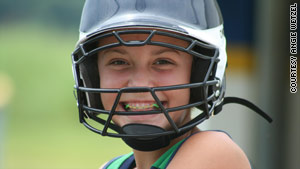
Mackenzie Riley, 13, played through pain until she got medical  help. Now she has special shoes to prevent future injury.

Mackenzie Riley is only 13 years old, but her schedule is busier than many adults. Besides being on her middle-school yearbook staff and taking piano and voice lessons once a week, she is also the co-captain of her seventh-grade basketball and volleyball teams.

"I like playing sports a lot," Mackenzie says. "I like the teamwork and having us all come together." This year she is also adding softball and track to the mix.

Mackenzie's parents, Todd and JoAnna Riley, attend many of her games, so during last year's basketball season they knew immediately when something was wrong. "We noticed that as she was playing she asked to sit down more, which is not something she typically wants to do," recalls JoAnna Riley.

Mackenzie started complaining of pain and bruising in her foot during the games, but she often felt better afterwards, so her parents didn't think much of it. "We thought we could treat it on our own," admits JoAnna, "so we gave her anti-inflammatory and pain relievers to help those aching bones."

But Mackenzie continued to have problems and her parents' concerns grew. "The longer it went on, the more we thought it wasn't something that was going to go away on its own."

Halfway through the season, the Riley's decided it was time to see specialist. Mackenzie got a diagnosis of plantar fasciitis, a condition that develops gradually over time and is most common in people between ages 40 and 60. But for Mackenzie, the condition developed despite her young age due to a combination of her being flat-footed and from overuse from continuously playing sports that put a lot of stress on her feet.

Major sports injuries increasing among children

According to Safe Kids USA, more than 30 million American children participate in extracurricular sports each year, and the American Academy of Orthopedic Surgeons estimates that more than 3.5 million children age 14 and younger seek medical attention each year as a result of sports injuries.

Dr. Charles Giangarra, chief of athletics and orthopedic sports medicine at Marshall University in West Virginia, and the physician who treated Mackenzie, says the push to be competitive is causing "significant problems" in young people. He says his practice is seeing more and more pediatric patients with serious injuries previously associated with adults. But that's not all.

"It's not uncommon for me to see a 10-year-old whose parents ask me to give them permission to play in the youth football championship -- because another doctor has disqualified the child due to an injury," Giangarra wrote in an email.

Let's face it though, what parent doesn't at least wonder if their little leaguer could be the next Derek Jeter or their little gymnast the next Shawn Johnson? "We have to remember, though, that a child is not just a small adult" says Dr. Paul Sethi, president of the ONS Foundation for Clinical Research and Education, a group that works to prevent sport injuries in young athletes.

"Their bodies are not the same." The Centers for Disease Control and Prevention says that pediatric sports injuries are largely preventable, and ther experts agree. Here are five ways parents can help make sure their child stays in the game injury free:

1. Diversify your child's sports portfolio

"It's not a good idea to play the same sport all year long," warns Sethi. He says having your child play several sports which work different parts of the body helps avoid overuse injuries. "If your child plays tennis for half the year, then consider putting them in soccer the other half of the year," he says.

2. Don't let your child play if he or she is in pain

Dr. Charles Metzger, an orthopedic surgeon and author of a recent study looking at overuse injuries in minor league baseball players, advises that "if you know your child is taking Motrin or Tylenol to soothe pain, take them out of the game." He says "playing through pain" means the underlying problem is not being addressed, which can lead to future complications.

Giangarra has another way of looking at it. "If you're experiencing pain, then whatever being done is either being done wrong or your body is not handling it," he says, adding "It's your brain's way of protecting you."

3. Know the pitch limits (for baseball)

In a study presented this year at the American Academy of Orthopedic Surgeons conference, researcher Dr. Charles Metzger found that of children ages 7 to 15 involved in youth baseball for one season, 14 percent had developed problems with in the ligament that helps in the rotation of the shoulder, a precursor to the more serious injuries such as labral tears, painful injuries to the shoulder joint often seen in Major League Baseball players.

Little League International, the national organization representing youth baseball players, has specific pitch limits -- and escalating rest requirements based on the number of pitches thrown -- to help protect children from overuse injuries. Some examples of pitch limits:

• Ages 9-10: 75 pitches per day
• Ages 11-12: 85 pitches per day
• Ages 13-16: 95 pitches per day

Little League International's pitch limits and suggested rest schedule

"There's nothing as detailed as this for other sports," says Dr. Cynthia LaBella, medical director for Children's Memorial Hospital's Institute for Sports Medicine in Chicago. "So certainly a parent who is proactive can go to the game, get out their counters and keep track from the sidelines."

The group Stop Injury Now has tips for how to prevent overuse injuries in other sports.

4. Learn the coach's 'injury philosophy'

"If you can't attend an event, your child's care is usually the responsibility of the coach," says Giangarra. He encourages parents to ask the coach specifically about his or her philosophy on dealing with an injury.

A few questions he recommends:

• What is your experience coaching a child with an injury and how did you handle it?
• What is your philosophy on informing the parent when a child complains of pain?
• Do you have any previous medical experience?

"If a coach is afraid to answer such questions, this could be a serious red flag for the parent," Giangarra says.

5. Be familiar with the common injuries for your child's sport

Children have growth plates in areas like their shoulders, knees, elbows and heels that have not yet fused and often are affected by the sports they play. If they are damaged, it can lead to permanent damage. Knowing the types of injuries common in your child's sport(s) can help you observe the early warning signs of injury, and where to look for them.

"Sports involving running, cutting, jumping and quick changes in direction are associated with lower-extremity injuries, just as sports involving overhead activities usually are associated with upper extremity injuries," explains Giangarra.

Here are some examples of sport-specific overuse injury locations:

• Baseball: May develop pain in the elbow and shoulder.
• Soccer and football: May develop pain in the ankles, knees and heels.
• Gymnasts: May develop pain in the wrists.
• Tennis: May develop pain in the shoulder.

Becoming familiar with these is a good idea, but experts warn against looking only for injuries in these areas, especially if your child plays multiple sports. "Anytime they complain of pain, especially in the joints, they should be evaluated," says LaBella. No matter where the problem is located, if it returns after they rest, get them checked out, she says.

Nationwide Children's Hospital injury prevention tips

As for Mackenzie Riley, the condition she had, if left untreated, could have led to lifelong chronic problems or initiated other issues in the foot, knee, hip or back, which could potentially keep a thriving young athlete out of the game for good.

Fortunately for Mackenzie, her injury was caught before it turned into something more serious. Now she has to do more stretches and wear special shoes to help prevent more injury, and she has to take seasonal breaks between sporting activities.

Mackenzie is taking it all in stride. "I had to cut back a little bit, but I know that in order for it to get better taking a break is something I have to do."

Sunday, April 11, 2010

Sinless chocolate desserts: Raspberry-Chocolate Angel Food Cake

Think decadently rich cocoa treats are always out of reach of a healthy diet? Think again. These cakes, tortes, puddings and more are all around 300 calories a serving (or less!) and have nutritious body benefits to boot. Now, that’s heavenly.


Makes 6 cakes

INGREDIENTS

Cake

  • Vegetable oil cooking spray
  • 8 large egg whites
  • 1 teaspoon cream of tartar
  • 1/4 teaspoon salt
  • 1 cup sugar
  • 1 1/4 teaspoon vanilla extract
  • 3/4 cup all-purpose flour, sifted

Filling

  • 1/2 cup seedless raspberry preserves

Frosting

  • 6 oz semisweet chocolate chips
  • 3/4 cup sour cream
  • 1/2 pint fresh raspberries

PREPARATION

  1. For cake

    Heat oven to 350°. Coat bottom (not sides) of a 9" x 13" baking pan with cooking spray. Beat egg whites, 1 tbsp water, cream of tartar and salt in a bowl with an electric mixer on medium-low speed until foamy. Continue to beat, adding sugar a little at a time, until batter is fluffy. Add vanilla and beat 1 minute more. Sprinkle a small amount of the flour over top of batter and fold in; repeat 8 to 10 times or until you've incorporated all the flour. Spread batter in pan, coaxing evenly into corners with a rubber spatula, and shake pan once or twice to even out surface. Bake until cake is a light golden color and surface springs back gently to the touch, 25 to 30 minutes. Run a sharp knife around edges of cake to separate it from pan. Cool on a rack 2 hours.
  2. For filling

    Heat berry preserves in a small pan over medium heat, stirring constantly, until it reaches a gentle simmer.
  3. For frosting

    Melt chocolate in a double boiler. Take bowl off heat; stir in sour cream.
  4. Assembly

    Place a cutting board over cake pan; invert cake onto board. With a 2 1/2-inch biscuit cutter or round cookie cutter, cut 12 rounds from cake. Top 6 rounds with 1 heaping tbsp of raspberry filling (you will have some left over), then place 6 remaining cake rounds on top. Spread 1/4 cup frosting over top and sides. (You should have some frosting left over.) Top with raspberries. Serve immediately, or refrigerate and bring to room temperature 1 hour before serving.

Friday, April 9, 2010

Top 10 Walking with Diabetes Tips

The experts agree -- walking and other exercise is the prescription for people with diabetes. The American Diabetes Association says there is no restriction on what exercise diabetics can do, and it is the best way to prevent weight gain and cardiovascular disease -- the top killer of diabetics.

1. Get in the Walking Habit

Make exercise a regular part of your life. Experts agree that diabetics should exercise several days a week. To get started with walking, the free Walk of Life 10-Week Program includes daily walking and exercise assignments, lessons on how to walk, healthy recipes and nutrition tips. You can follow each daily page or join the daily newsletter version. More: Walk of Life 10-Week Program

2. Choose the Right Shoes

Taking care of your feet and preventing blisters is important for diabetics, as the disease slows wound healing. Properly fitted athletic shoes will help prevent blisters and other injuries, such as plantar fasciitis. The Walking Shoe Guide explains how to get fitted properly for walking shoes.

3. Socks are Important

Socks are also a critical defense against blisters. Toss out your cotton socks; they retain sweat and can cause blisters. Get socks made of today's miracle fabrics (such as CoolMax and Ultimax) that wick away sweat and prevent blisters.

4. Check Your Blood Sugar Levels

Check your blood sugar levels before and after walking.
Too low: below 100 mg/dl. If too low, you should eat some carbohydrates -- 15 to 30 grams.
Too high: over 250 mg/dl if Type 2, or over 200 mg/dl if Type 1. If too high, you need to postpone your walk until your blood sugar level lowers.
When out on a long walk, it is wise to check your blood sugar levels at regular intervals, especially if you are new to walking.

5. When to Walk

The best time for walking is 1 to 2 hours after a meal, when your insulin and blood sugar levels have settled down. Morning exercise is recommended, since it avoids the peak insulin part of the day, especially for Type 1 diabetics.

6. Your Insulin Dosage May Change

Your insulin requirements will change with exercise. When starting a walking program or increasing your amount of exercise, consult with your physician regularly on how to adjust your medications.

7. Drink, Drink, Drink, Drink, Drink

Drink up to prevent dehydration, which you may not notice until it is too late. Have a big glass of water an hour before walking, then drink a cup of water every 20 minutes while walking. At the end of your walk, drink another big glass of water. For long, hot walks of 2 hours or more, consider a sports drink that replaces salts, but check the carbohydrate content on the label.

8. Eating and Walking

Carry a snack for when you or your walking partner detects signs of low blood sugar. After walking, you may need to eat more carbohydrates than usual to prevent delayed hypoglycemia. Especially when starting or increasing your walking program, be extra aware of symptoms and signs, listen to your body, and consult your doctor with any questions on diet.

9. Know the Signs of Hypoglycemia

When walking, stay aware of your body and how you are feeling. It can be difficult to tell whether you are sweating from exertion or hypoglycemia. Here are symptoms, courtesy of NIH: feeling weak, drowsy, confused, hungry, and dizzy. Paleness, headache, irritability, trembling, sweating, rapid heart beat, and a cold, clammy feeling. In severe cases, you could lapse into a coma.

10. Buddy Up and Wear an Alert Bracelet

Walking with a partner or walking club has several benefits. First, you can have him watch you for signs of low blood sugar and nag you to take care of yourself. Second, walking with somebody else keeps you more regular in your exercise. In any case, wear a medical identification bracelet that says you have diabetes. That is critical in a medical emergency.More: Finding a Walking Partner

---

Source: http://walking.about.com/od/diabetes/tp/diabetictips.htm

Important Notice: Information provided is for general background purposes and is not intended as a substitute for medical diagnosis or treatment by a trained professional. You should always consult your community pharmacist or physician about any health care questions you may have, especially before trying a new medication, diet, fitness program, or approach to health care issues.

Wednesday, April 7, 2010

Google Launches New Way to Find Bicycling Trails - Where do you enjoy riding your bike?

There's nothing worse if you're a bicyclist and you suddenly find yourself a mile into a two-mile stretch of shoulder-less, busy, highway-speed traffic with no alternative route. So Google has added bicycling directions, lanes and routes to Google Maps.

The new feature also includes a "Bicycling Layer," which shows bike paths and bike-friendly streets with or without lanes:

  • Dark green indicates a dedicated bike-only trail
  • Light green indicates a dedicated bike lane along a road
  • Dashed green indicates roads that are designated as preferred for bicycling, but without dedicated lanes

According to Google, it has also taken steps to avoid uphill and long downhill routes, busy roads and even busy intersections.

Watch the Biking Directions on Google Maps Video: http://www.youtube.com/watch?v=JN5_NBSu7Lw

Sources:

Read Write Web March 10, 2010

Monday, April 5, 2010

10 sites worth checking out if your child has autism

Justin Kinninger's autism was diagnosed when he was 4. "We wondered where do we go from here?" says his mom, Shannon.

(CNN) -- Like many parents, Shannon Kinninger spends a lot of time chauffeuring her children around town.

"We are always on the go," says Kinninger.

On Mondays, Kinninger takes her son Justin to gymnastics. Every week, the Fayetteville, Georgia, fourth-grader trains one-on-one with his coach, Rob Chontos.

"I like the balance beam," says Justin, 9.

Chontos encourages Justin to stretch his lower back muscles and build his upper body strength. For Justin, gymnastics is not only fun, it's also therapeutic.

The Empowered Patient first introduced readers to Justin Kinninger two years ago. Justin has autism. From his earliest months, Kinninger believed something was different about her son.

"When he was supposed to be sitting up, he wasn't sitting up ... when he was supposed to be rolling over, he wasn't rolling over," says Kinninger, a nurse.

The pediatrician told Kinninger that Justin was just developing late because he's a boy. But Kinninger knew something wasn't right. Finally, when he was 4, Justin was diagnosed with autism.

"After the shock wore off, we had a lot of questions. We wondered where do we go from here?" says Kinninger.

Like many parents, Kinninger turned to the Internet for answers. This week, in honor of World Autism Awareness Day on April 2, the Empowered Patient has asked experts and parents their thoughts on the best Web sites for autism information.

Autism Speaks

Autism Speaks, an awareness and advocacy organization, just updated its week-by-week 100-day kit to help families navigate the days following an autism diagnosis. The kit includes advice on how to build a team of therapists, keep accurate phone records and adapt your home to protect your child from his or her uncontrolled behaviors. Also, Autism Speaks' video glossary has more than 100 video clips comparing the behavior of children with autism spectrum disorders with the behavior of a typical child.

The Autism Society of America

The Autism Society of America, an awareness and advocacy organization, has support groups throughout the United States. To find your local chapter, click here. The society has also partnered with AMC Entertainment to provide children affected by autism the opportunity to watch hit movies in a sensory-friendly environment, with the lights turned up and the sound turned down. To find a list of upcoming films in your city, click here.

The IAN Project

The Interactive Autism Network boasts the largest online study in the U.S., connecting researchers with people and families effected by autism. Its goal is to help further research and improve social services for people with autism. The site has a variety of resources, including a glossary of terms related to autism.

Simons Foundation Autism Research Foundation

Simons Foundation Autism Research Foundation investigates the causes of autism. The site is geared largely toward researchers and scientists, but it contains a regularly updated blog that parents can monitor to learn about the latest news and commentary on autism research.

First Signs

If you live near a major research university, you can find out whether anyone is looking for children with autism for research studies. Sometimes, these universities will provide care for your child as part of the study. First Signs, an awareness organization, has a list of researchers currently seeking study participants.

The U.S. Department of Education

When your child enters public school, he or she has rights under federal and state laws. The U.S. Department of Education has information about federal laws and state laws. You and your school district will come up with an Individual Education Plan. School districts often have a Special Education Parent Teacher Association. Parents there can often give good advice on how to work with the school district.

The National Dissemination Center for Children with Disabilities

Any child younger than 3 with a developmental delay is eligible to receive services through Early Intervention, a government-mandated program that provides services to eligible children. Services are free and vary from state to state, but they may include speech and language instruction and occupational and physical therapy. To learn how to apply for Early Intervention, click on this state-by-state directory from the National Dissemination Center for Children with Disabilities and scroll down.

Wrightslaw Yellow Pages for Kids With Disabilities

Early intervention is invaluable because it links parents to services in the community, but Lisa Goring, mother of a child with autism and director of family services at Autism Speaks, warns that parents may also have to search on their own, since it can be hard to find services without a long waiting list. "There just aren't enough service providers for the kids who need them," Goring says. To find services on your own, wrightslaw.com, which offers information about special education law and advocacy, has a Yellow Pages for Kids that lists providers.

Jobs 4 Autism

Jobs4autism is an online forum to help people with autism find employment. Employers can post job openings, and users can post stories of successful and unsuccessful job experiences.

World Autism Awareness Day

To find out how autism organizations throughout the world are celebrating World Autism Awareness Day, check out this year's list of events. The site also includes materials for all parents with children about the eight red flags that may indicate your child has autism and should be screened by doctors.

The bottom line, says Kinninger, is to do your homework. What works for one child may not work for another.

Kinninger says that by getting the facts on treatment and what works, it will save time and money. "Knowledge is power."

CNN's Elizabeth Cohen and Ferre Dollar contributed to this report.

-----------

Source: By Jennifer Bixler and John Bonifield, CNN

http://www.cnn.com/2010/HEALTH/04/01/ep.autism.resources/index.html

Important Notice: Information provided is for general background purposes and is not intended as a substitute for medical diagnosis or treatment by a trained professional. You should always consult your community pharmacist or physician about any health care questions you may have, especially before trying a new medication, diet, fitness program, or approach to health care issues.